History · Ch 4 — The Three Orders
The Manorial Estate
The Manorial Estate
The manor was the economic heart of medieval Europe, a self-sufficient estate where the lord’s authority and the peasants’ labour met. At its centre stood the lord’s house, surrounded by cultivated land, pastures, and wasteland, all worked to meet the needs of the estate’s inhabitants. The land was divided into the demesne, kept for the lord’s direct use, and the holdings of the peasants, who owed him rents and services in return. This arrangement bound every resident into a we …
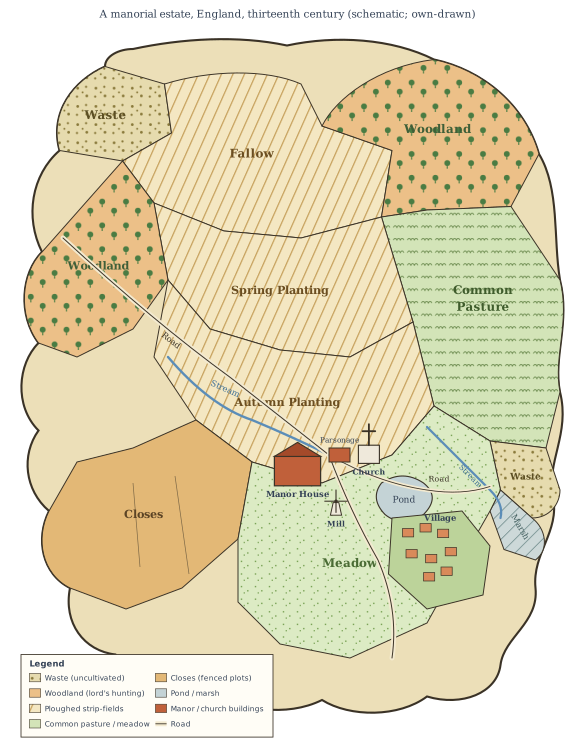
Drawn by us to help you understand the concept clearly, and verified to make sure it's accurate. For exams, practice from your NCERT textbook's own diagram.
A single glance at this plan is enough to see that a medieval manor was not just a farm. It was a complete, self-contained world in miniature. The artist who drew this thirteenth-century English estate has laid the whole thing out like a map, so that every piece of land has a name and a job. Nothing is left vague. The fields are not blank spaces; they are labelled by their use — waste, woodland, common, pasture, land under autumn planting, closes and meadow. That labelling is the real lesson of the figure: land was not simply "there", it was actively managed, divided and assigned.
The built-up heart of the estate sits in the middle of all this working land. Here we find the manor house, the home of the lord, and right beside it the parsonage and the church — a reminder that spiritual authority and secular authority stood side by side, often literally. Around them cluster the village houses, the homes of the peasants who actually worked the fields. A mill and a pond complete the picture, and these are not incidental details. The mill was where the lord's monopoly over grinding grain was enforced — peasants had to bring their corn there and pay for the service. The pond supplied water and fish. Roads and a stream thread through the whole arrangement, tying the village to its fields and to the outside world.
What the figure teaches is the sheer integration of the manor. A single estate combined arable farming — the land under autumn planting, which would grow the next year's grain — with pasture for animals, woodland for timber and fuel, and meadow for hay. The "waste" and "common" were not useless; they were shared resources where peasants could graze livestock or gather firewood. The "closes" were small enclosed plots, often held by individuals. So the plan shows, at a glance, how one estate balanced every need of daily life: food, fodder, fuel, shelter and worship, all within walking distance of the village. …