History · Ch 4 — The Three Orders
The Second Order: The Nobility
The Second Order: The Nobility
The Second Order was the nobility, a class defined by birth and the possession of land, which set it apart from the peasantry below and the clergy above. Its members were warriors whose primary duty was to fight, and their social standing rested on the fiefs they held from a lord, for which they owed military service. This order was not a single, uniform group; it had its own internal hierarchy, ranging from great lords and dukes down to simple knights, each bound to the other by ties of homage and loyalty. In essence, the nobility's power came from controlling land and the labour of those who w …
Drawn by us to help you understand the concept clearly, and verified to make sure it's accurate. For exams, practice from your NCERT textbook's own diagram.
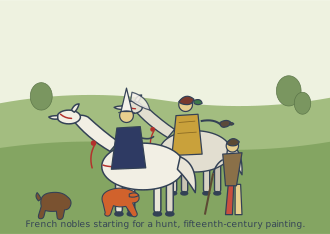
A fifteenth-century painting shows French nobles setting out on a hunt. Two mounted riders lead the way, dressed in fine clothes that mark their high rank. One carries a falcon perched on a gloved hand — a bird trained for hunting, and a symbol of aristocratic leisure. An attendant walks on foot beside them, and hounds run alongside, ready to flush out game. The scene is set outdoors, on the lord's own woodland, which the text describes as one of the everyday privileges of noble rank.
The painting teaches that hunting was not merely sport but a display of status. Only the nobility had the right to hunt on their own land; peasants who poached faced severe punishment. The falcon, the fine dress, the mounted position, and the servant all reinforce the social distance between the lord and those who worked the land. The hounds and the attendant show that even a pastime required resources and manpower that ordinary people could not command. …