Biology · Ch 11 — Enhancement of Food Production
Sericulture
Sericulture
F. Sericulture : Sericulture is the branch of applied zoology dealing with the rearing of silkworms and the production of silk from them. Like other forms of farming, it demands genuine skill and scientific knowledge to carry out well, but it has two practical advantages that set it apart: it requires comparatively little investment, and it can be started in a very small space. Partly for these reasons, it is one of the oldest organised businesses still practised today, and a very large number of Indian families are involved in silk production; because the physical demands of rearing silkworms are modest, it is also work that disabled, older and otherwise disadvantaged people can successfully carry out.
Silk quality and the silkworm's biology. The best-quality silk, known as mulberry silk, is produced by the silkworm Bombyx mori; tussar silk and eri silk, produced by other silk-moth species, are considered of inferior quality by comparison. Crucially, the quality and quantity of silk obtained depends directly on the quality of the mulberry leaves the larvae are fed on, which is why mulberry cultivation and silkworm rearing are usually managed together.
Rearing and its risks. Rearing, developing and looking after silkworms requires real skill, labour and constant watchfulness — a single moment of negligence can spoil an entire batch, and by extension seriously damage the livelihood built around it. Silkworm larvae are vulnerable to infection by protozoans, viruses and fungi, and are also preyed on by ants, crows, birds and other predators, so the cages in which the larvae are kept must be actively managed and protected against such attacks throughout the rearing period. …
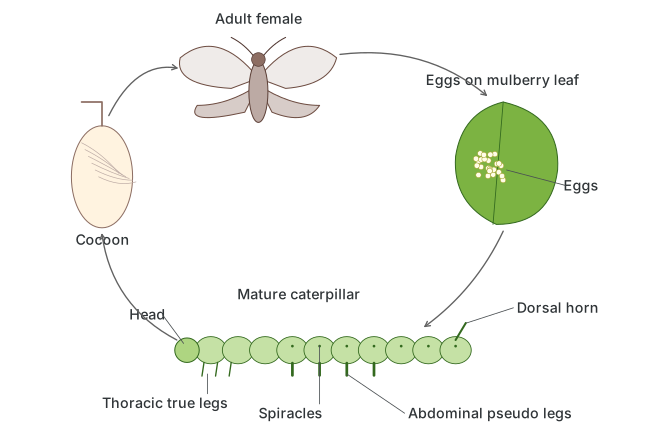
Drawn by us to help you understand the concept clearly, and verified to make sure it's accurate. For exams, practice from your textbook's own diagram.
What this figure shows. This figure traces the complete life cycle of the mulberry silkworm Bombyx mori, from eggs laid by the adult female on a mulberry leaf, through hatching into a caterpillar (larva) that has a head, thoracic true legs, abdominal pseudo-legs, spiracles for breathing and a characteristic dorsal horn, to the mature caterpillar spinning a cocoon of silk fibre around itself, and finally the adult moth that eventually emerges. It highlights the caterpillar's external anatomy because it is this larval stage that spins the cocoon from wh …