Biology · Ch 10 — Human Health and Diseases
AIDS
AIDS
K. AIDS : AIDS (Acquired Immuno Deficiency Syndrome) is a usually fatal illness caused by a retrovirus (a single-stranded RNA virus) called the Human Immunodeficiency Virus (HIV), which weakens the body's immune system and leaves a person vulnerable to life-threatening opportunistic infections, neurological disorders and unusual malignancies. AIDS is a modern, worldwide pandemic, affecting both industrialised and developing countries; it was first noticed in the USA in 1981, and India's first confirmed case was reported from Tamil Nadu in April 1986.
Structure of HIV: HIV is spherical and 100-140 nm in diameter. At its centre lie two single-stranded RNA molecules along with the enzyme reverse transcriptase. This core is enclosed by two protein layers — an inner capsid protein (p24) layer and an outer matrix protein (p17) layer — over which sits an additional layer of lipid, the viral envelope, studded with the glycoproteins Gp120 and Gp41. HIV replicates inside actively dividing T4 (helper T) lymphocytes and can also persist in a latent state within lymphoid cells; its unique, defining ability is to progressively destroy the body's T4 lymphocytes. HIV is found in the highest concentration in blood, semen and cerebrospinal fluid (CSF), and to a lesser extent in tears, milk, urine, saliva, and cervical/vaginal secretions.
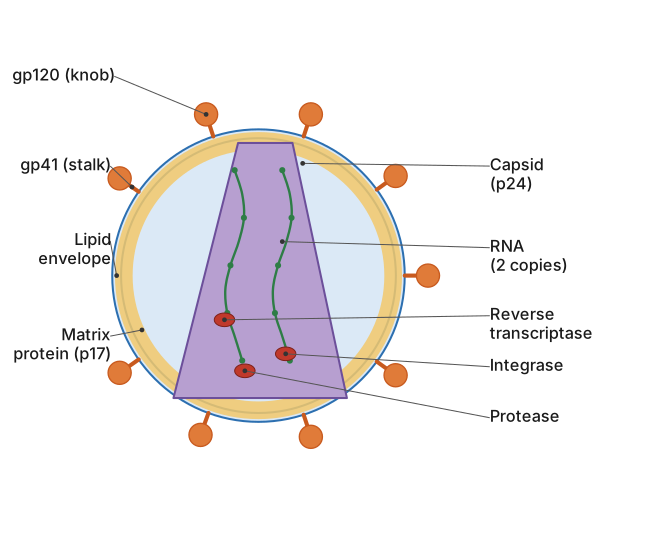
Drawn by us to help you understand the concept clearly, and verified to make sure it's accurate. For exams, practice from your textbook's own diagram.
What this figure shows. A cutaway schematic of a roughly spherical HIV particle. At the centre, two strands of RNA are shown coiled together with associated reverse transcriptase enzyme molecules. Surrounding this core is an inner protein shell labelled capsid proteins, and around that an outer protein shell labelled matrix proteins. The whole is enclosed by an outermost lipid coat (the envelope), studded with two labelled glycoprotein spikes projecting outward from its surface — a larger surface knob labelled Gp120 seated on a stalk labelled Gp41 that anchors it into the lipid coat.
10.14: Structure of HIV. …
Transmission: HIV spreads through unsafe sexual contact (oral, vaginal or anal); through blood, via transfusion or shared needles; and from mother to child, either across the placenta before birth or through breast milk after birth. Rarer routes include accidental needle injury, artificial insemination with infected donor semen, and organ transplantation from an infected donor. Although HIV has also been found in urine, tears, saliva, breast milk and vaginal secretions, it does not appear to spread through these fluids unless they enter an open wound. HIV infection is not spread by casual contact — hugging, insect/mosquito bites, playing sports, touching items an infected person has touched, handshakes, sharing clothes, or swimming pools.
Clinical manifestations progress through four broad stages: (i) initial infection and antibody formation, usually 2-8 weeks after exposure; (ii) an asymptomatic carrier state with no visible disease, lasting anywhere from 6 months to 10 years; (iii) AIDS-related complex (ARC), marked by signs such as fever lasting over a month, fatigue, unexplained diarrhoea, night sweats, breathlessness, and loss of more than 10% of body weight; and (iv) AIDS itself, the end-stage of HIV infection, characterised by life-threatening opportunistic infections such as pneumonia, tuberculosis and Kaposi's sarcoma.
Laboratory diagnosis: An initial ELISA (Enzyme-Linked Immunosorbent Assay) test detects HIV antibodies; because this screening test can give false positives, a highly specific confirmatory test, usually the Western Blot, is used to verify a positive result by detecting antibodies to specific viral core and envelope proteins.
Treatment: AIDS has no cure, but Antiretroviral Therapy (ART), using drugs such as TDF (tenofovir), EFV (Efavirenz) and Lamivudine (3TC), can reduce the viral load and prolong the patient's life.
Prevention: Since there is no cure, prevention is the only reliable protection — educating high-risk groups about HIV transmission; using disposable needles/syringes and disposing of them safely and immediately; changing risky sexual habits; discouraging high-risk individuals from donating blood; never sharing items like toothbrushes or razors that could carry contaminated blood; ensuring donated blood is screened before transfusion; and routine screening of blood donors, organ donors, semen/growth-hormone donors, haemodialysis patients, and pregnant or soon-to-be-pregnant women in high-risk groups. In India, five AIDS reference centres have been established — AIIMS (New Delhi), the National Institute of Virology (Pune), the National AIDS Research Institute (NARI, Bhosari, Pune), the Centre of Advanced Research on Virology (Vellore), and the National Institute of Communicable Diseases (New Delhi) — and the National AIDS Control Organization (NACO) was set up in 1992 under the Ministry of Health and Family Welfare to curb HIV transmission and its impact. India runs a National AIDS Control Programme (since 1987), and World AIDS Day is observed every year on 1 December, with a red ribbon worn as its universal symbol of awareness and support.
Do you know? …