Biology · Ch 10 — Human Health and Diseases
Cancer
Cancer
J. Cancer : Cancer results from abnormal, uncontrolled and purposeless division of cells, forming a mass of undifferentiated cells called a tumor (or neoplasm, except in leukaemia, where no solid mass forms). When a tumor is malignant, it is called cancer, and it has the ability to invade other tissues; cancerous cells also compete with normal cells for nutrients, release secretions that alter body function, and grow rapidly enough to overcrowd and disrupt normal tissue. Physicians specialising in the study, diagnosis, treatment and prevention of cancer are called oncologists.
Benign vs malignant tumors: Not every tumor is cancerous. A benign (non-malignant) tumor grows slowly, may become quite large, but stays localised at its site of origin and does not spread elsewhere — though this does not mean it is harmless: a brain tumor, for instance, can be fatal simply by compressing the brain against the skull, and some benign tumors (e.g. adenoma, fibroid) can later turn malignant. A malignant tumor (cancer) grows rapidly, has a comparatively higher mortality rate, and its cells can spread from one organ to another via the blood or lymph, forming new secondary tumors elsewhere — this spreading process is called metastasis.
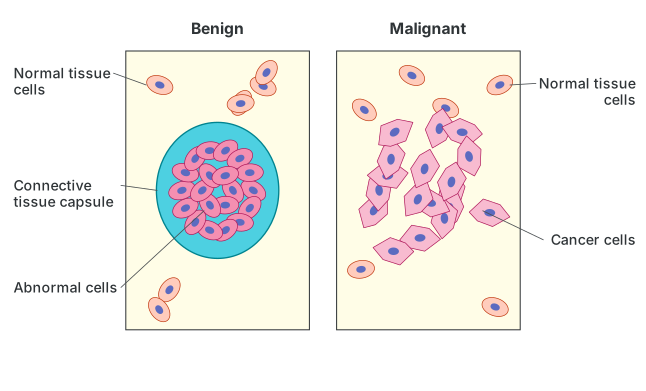
Drawn by us to help you understand the concept clearly, and verified to make sure it's accurate. For exams, practice from your textbook's own diagram.
What this figure shows. A side-by-side comparison of two tumour cross-sections. The left panel, labelled Benign, shows a compact mass of abnormal cells fully enclosed within a distinct connective-tissue capsule, surrounded by unaffected normal tissue cells, illustrating that the growth stays confined to one localised site. The right panel, labelled Malignant, shows an irregular, uncapsulated mass of darker-shaded cancer cells with finger-like projections actively invading and mixing into the surrounding normal tissue cells, illustrating the invasive s …
a. Types of cancer (named by the tissue of origin): carcinoma — arising from the epithelial tissue lining organs (e.g. breast, lung, stomach, skin cancer); sarcoma — arising from connective tissue (e.g. bone/osteosarcoma, muscle/myosarcoma, cartilage/chondrosarcoma, fat/liposarcoma); lymphoma — arising from lymphatic tissue (lymph nodes, spleen, immune-system tissue); leukaemia — a blood cancer with excessive, abnormal, immature white blood cells (leucocytes) that cannot fight infection, produced in the bone marrow (e.g. monocytic, lymphoblastic leukaemia); and adenocarcinoma — cancer arising in glandular tissue such as the thyroid, pituitary and adrenal glands.
Find out
Collect information about different types of lymphoma and hereditary cancer syndromes.
Causes of cancer (carcinogenic factors): chemicals — nicotine, caffeine, products of coal/oil combustion, several polycyclic hydrocarbons, and excess sex hormones/steroids (breast cancer, for example, has a hormonal link and is more common in women who do not breastfeed); radiation — X-rays, gamma rays, cosmic rays and UV radiation (skin-cancer incidence is higher among people who work outdoors in strong sunlight); viruses — some viruses carry viral oncogenes (v-onc genes) and are called oncogenic viruses, e.g. Epstein-Barr virus (EBV), Human Papillomavirus (HPV); oncogenes — normal cells also carry cellular oncogenes (c-onc genes), or proto-oncogenes, which under certain conditions can become activated and drive a cell toward cancerous transformation; and addiction — smoking/chewing tobacco is linked to cancers of the mouth, lips and lungs; alcohol to cancers of the oesophagus, stomach, intestine and liver; and drugs such as marijuana and anabolic steroids are also implicated. A specific set of chemical carcinogens and the organs they target includes: soot and coal tar (skin, lungs), cigarette smoke (lungs), cadmium oxide (prostate gland), aflatoxin — a metabolite of the mould Aspergillus flavus (liver), 2-naphthylamine and 4-aminobiphenyl (urinary bladder), mustard gas, nickel/chromium compounds and asbestos (lungs), diethylstilbestrol/DES (vagina), and vinyl chloride (liver).
Soot -> Skin, lungs.
Coal tar (3,4-benzopyrene) -> Skin, lungs.
Cigarette smoke (N-nitrosodimethylamine) -> Lungs.
Cadmium oxide -> Prostate gland.
Aflatoxin (a metabolite of the mould Aspergillus flavus) -> Liver.
2-naphthylamine and 4-aminobiphenyl -> Urinary bladder.
Mustard gas -> Lungs.
Nickel and chromium compounds -> Lungs.
Asbestos -> Lungs. …
…