Biology · Ch 10 — Human Health and Diseases
Amoebiasis
Amoebiasis
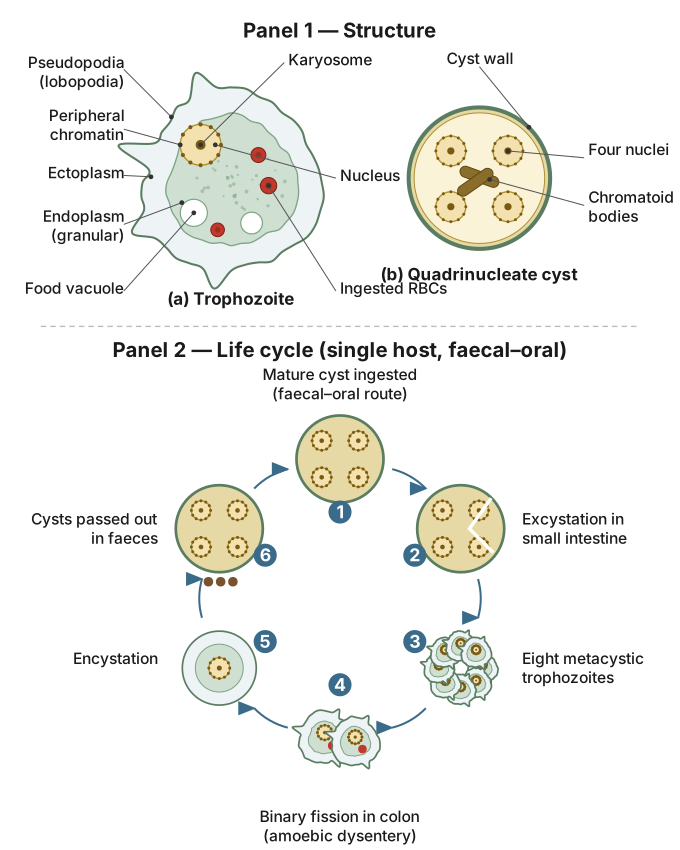
B. Amoebiasis : Amoebiasis, also known as amoebic dysentery, is caused by the protist parasite Entamoeba histolytica. It is a common infection of the human gastro-intestinal tract, affecting an estimated 15% of India's population.
Drawn by us to help you understand the concept clearly, and verified to make sure it's accurate. For exams, practice from your textbook's own diagram.
What this figure shows. A cyclic diagram tracing Entamoeba histolytica through two body forms. A feeding trophozoite (labelled with its nucleus, endosome, food vacuoles, pseudopodia used for movement, and an ingested red blood cell within a food vacuole, with the cell body divided into an outer clear ectoplasm and inner granular endoplasm) is shown undergoing binary division inside the host's intestine. Under unfavourable conditions the trophozoite rounds up into a precystic form and secretes a protective cyst wall around itself, becoming first a uninucleate cyst, then dividing internally (with visible chromatoid bodies and glycogen vacuoles as food reserves) into a binucleate cyst and finally a mature quadrinucleate cyst — the resistant stage passed out in faeces. When such a cyst is swallowed by a new host, it undergoes excystment, releasing a multinucleate metacystic amoeba that divides into several small amoebulae, each developing into a new feeding trophozoite that completes the cycle. …
Signs and symptoms: Diarrhoea, flatulence, stool containing mucus, and abdominal cramps are common; passage of blood with the stool occurs in severe cases. If the parasite invades the liver, it can cause hepatomegaly and an amoebic liver abscess, accompanied by fever and pain in the right side of the abdomen.
Mode of transmission: The faeco-oral route — eating with dirty hands, or consuming food and water contaminated with the cyst stage of the parasite.
Diagnosis and treatment: Diagnosed by microscopic examination of a stool sample; treated with Metronidazole and Tinidazole, which destroy E. histolytica both in the digestive tract and in other tissues it may have invaded. …