Biology · Ch 10 — Human Health and Diseases
Typhoid
Typhoid
E. Typhoid : Typhoid is an acute infection of the intestine caused by the Gram-negative bacterium Salmonella typhi, found in the intestinal lumen of infected people. Its pathogenicity is linked to its 'O' antigen (a lipopolysaccharide on its surface coat) and its 'H' antigen (carried on its flagella).
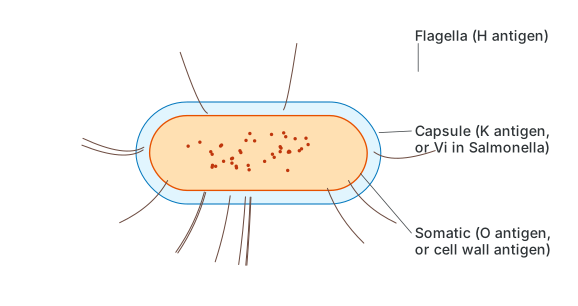
Drawn by us to help you understand the concept clearly, and verified to make sure it's accurate. For exams, practice from your textbook's own diagram.
What this figure shows. A schematic drawing of a single rod-shaped Salmonella typhi bacterial cell, labelled to show its outer somatic cell-wall surface (bearing the O antigen), a surrounding capsule layer (bearing the Vi/K antigen), and multiple whip-like flagella projecting from the cell surface (bearing the H antigen) — the three distinct antigen-bearing structures …
Signs and symptoms: Prolonged fever, sometimes as high as 104 degF; general nausea, fatigue and headache; abdominal pain with constipation or diarrhoea; a rose-coloured skin rash; a white coating on the tongue and cough; loss of appetite (anorexia); and, if untreated, breathlessness, irregular heartbeat and haemorrhage.
Mode of transmission: A food- and water-borne disease; insects such as houseflies and cockroaches, by feeding on faecal matter, can carry the bacteria onto food; poor personal hygiene and poor sanitation drive its spread. …