Biology · Ch 10 — Human Health and Diseases
Malaria
Malaria
A. Malaria : Malaria is a vector-borne infectious disease caused by the protist genus Plasmodium. Four species infect humans — P. vivax, P. ovale, P. malariae and P. falciparum — giving four corresponding types of malaria; only P. falciparum typically causes serious, potentially fatal illness, while infection with the other three is rarely fatal.
P. vivax - incubation period 14 days - high fever after a 48 hr interval.
P. malariae - incubation period 28 days - high fever after a 72 hr interval.
P. ovale - incubation period 17 days - high fever after a 48 hr interval. …
Signs and symptoms: Symptoms usually begin 7 to 15 days after the bite of an infective mosquito. Early symptoms — fever, headache and chills — can be hard to recognise as malaria at first. The classical symptom is a cyclic pattern of high fever followed by sweating and sudden shivering, an episode that lasts four to six hours and recurs every two or three days as the parasite's blood cycle repeats. Other features include vomiting, convulsions, joint pain (arthralgia), anaemia (from the rupturing of infected RBCs), haemoglobinuria, an enlarged liver (hepatomegaly), retinal damage, and — in severe P. falciparum infection — cerebral malaria (infection of the brain).
Mode of transmission: Plasmodium passes from person to person via the bite of the female Anopheles mosquito. When an infected mosquito bites, it injects sporozoites into the person's blood; these travel to the liver, where they reproduce asexually by fission (schizogony), and the resulting merozoites then invade red blood cells, where further schizogony continues the cycle of RBC rupture that causes the fever episodes. Within the erythrocytes, some merozoites instead develop into male and female gametocytes (gamogony). If a mosquito takes up these gametocytes during a blood meal, fertilisation occurs in the mosquito's gut, forming a diploid zygote that becomes an oocyst; through meiosis (sporogony), the oocyst produces large numbers of haploid sporozoites, which migrate to the mosquito's salivary glands, ready to infect the next human host bitten.
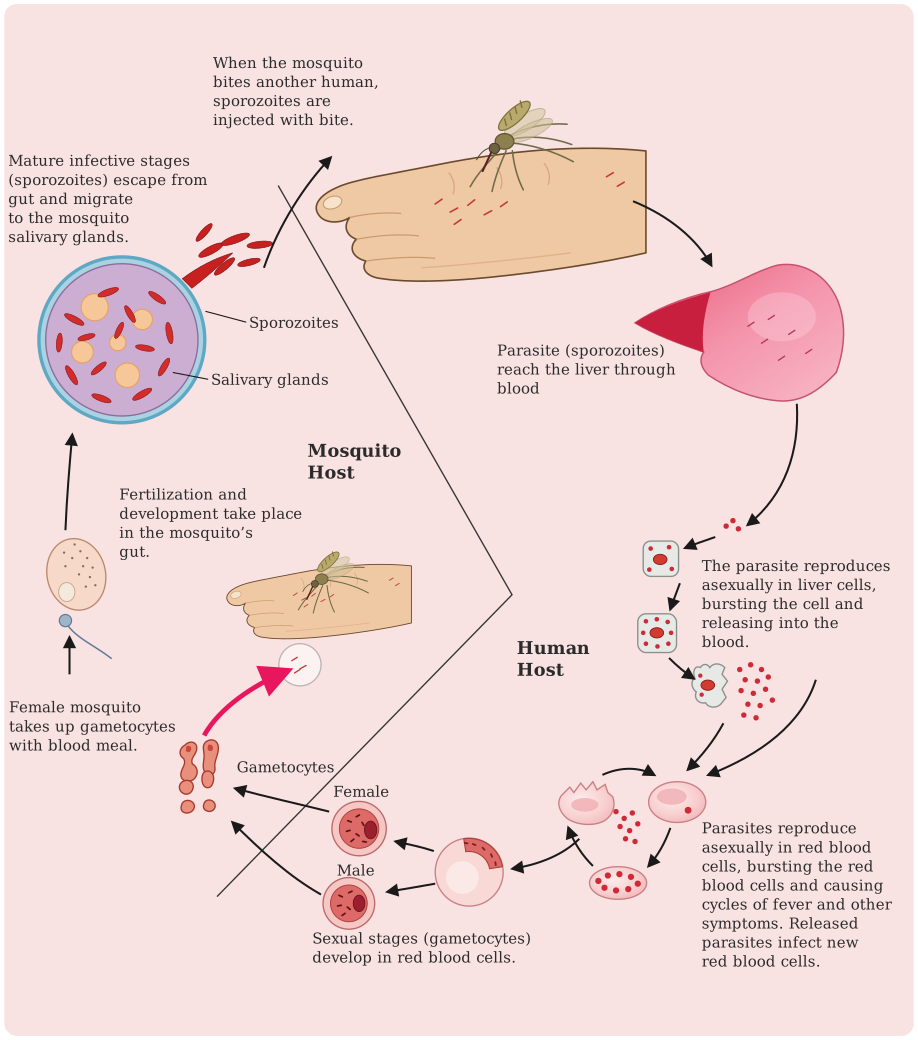
Drawn by us to help you understand the concept clearly, and verified to make sure it's accurate. For exams, practice from your textbook's own diagram.
What this figure shows. A two-part cyclic life-cycle diagram split into a 'Cycle in Human' half and a 'Cycle in Mosquito' half, connected at the point where a mosquito bites human skin. On the human side, sporozoites are shown entering a hepatic cell, developing there (with a dormant hypnozoite stage also indicated), releasing merozoites that invade erythrocytes as a trophozoite, growing into an erythrocytic schizont, and rupturing the erythrocyte to release more merozoites (the repeating blood cycle that causes the cyclic fever), with some merozoites instead becoming male and female gametocytes. On the mosquito side, ingested gametocytes are shown forming a macrogamete and microgamete that fuse into a zygote, which becomes a motile ookinete, then an oocyst in the mosquito's midgut wall; the bursting oocyst releases sporozoites that migrate to the salivary gland, ready to infect the next human host bitten.
10.5: Stages in the Life Cycle of Plasmodium in Mosquito and Human. …
…