Biology · Ch 7 — Plant Growth and Mineral Nutrition
Denitrification and Sedimentation
Denitrification and Sedimentation
Denitrification : It is the process by which anaerobic bacteria in the soil convert nitrates back into gaseous nitrogen, removing fixed nitrogen from the ecosystem and returning it to the atmosphere in its inert form. Denitrifying bacteria -- including species of Bacillus, Paracoccus and Pseudomonas denitrificans -- transform soil nitrate stepwise through nitrite and nitric oxide to gaseous nitrogen (2NO3- -> 2NO2- -> 2NO -> N2), completing the cycle back to atmospheric N2.
2NO3- --> 2NO2- --> 2NO --> N2
Sedimentation : Nitrates of the soil are washed away to the sea or leached deep into the earth along with percolating water.
Do you know?
- Soil nitrogen is replenished through the nitrogenous waste of animals (as ammonia, urea and uric acid), ammonification and nitrification.
- Plastids contain nitrite reductase, which reduces nitrite to ammonia.
Activity
Label the following diagrams and identify the types of germination.
…
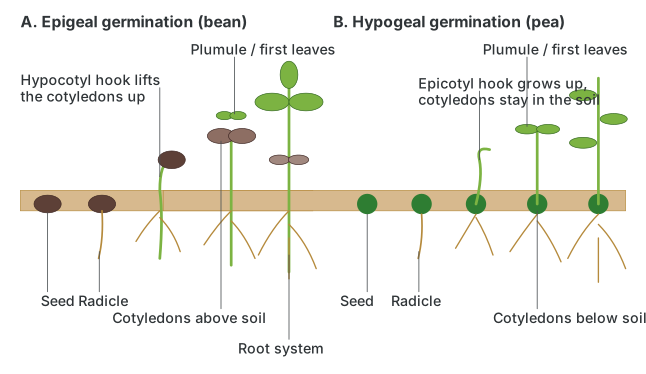
Drawn by us to help you understand the concept clearly, and verified to make sure it's accurate. For exams, practice from your textbook's own diagram.
What this figure shows. A. Epigeal germination of bean: seed, radicle emerging, the hypocotyl hook lifting the seed, the two cotyledons opened above the soil with the plumule between them, and the seedling with foliage leaves and shrivelling cotyledons. B. Hypogeal germination of pea: seed, radicle, the epicotyl hook, the plumule unfolding while both cotyle …