Project · Q2
Q.Prepare chart differentiating the epigeal and hypogeal germination.
Maharashtra MsbshseTextbookSubjectiveImportance★★★★★est
53% · 37/70 Questions
✓ Free question
A two-column chart contrasting epigeal germination (hypocotyl grows, cotyledons rise above the soil) with hypogeal germination (epicotyl grows, cotyledons stay underground).
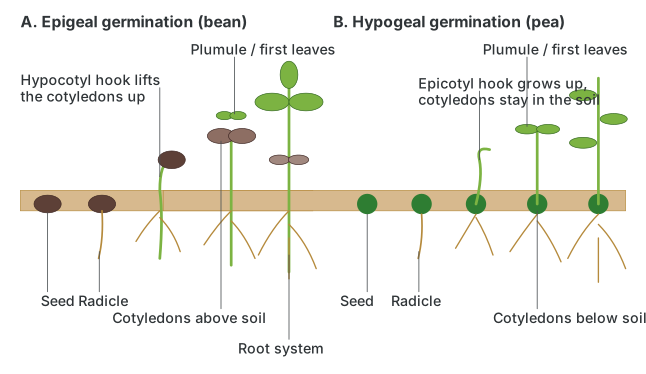
| Point | Epigeal germination | Hypogeal germination |
|---|---|---|
| Part of the axis that elongates | Hypocotyl (the region below the cotyledons) | Epicotyl (the region above the cotyledons) |
| Position of cotyledons | Pushed above the soil surface | Remain below the soil surface |
| Hook that breaks the soil | Hypocotyl hook | Epicotyl hook |
| Fate of cotyledons | Turn green, may photosynthesise briefly, then shrivel and fall | Stay pale, shrivel underground after the food is used |
| First green organs | Cotyledons, then the foliage leaves | The foliage leaves of the plumule |
| Examples | Bean, castor, cotton, tamarind, papaya, onion | Pea, gram, maize, rice, wheat, mango |
Draw the two sequences from your own tray (Project 1) beside the chart, labelling seed coat, radicle, hypocotyl, epicotyl, cotyledons and plumule.
✓Final answer
Epigeal germination lifts the cotyledons above the soil by hypocotyl growth (bean, castor); hypogeal germination leaves them below the soil while the epicotyl grows (pea, gram, maize).
Unlock everything free for 14 days
- Full step-by-step solutions
- Concept-first explanations
- Methods, shortcuts & mistakes
- PYQ mapping + timed mock tests
Full access for 14 days. No credit card required.