Question 72 of 97
Q.Explain the structure of chromosome.
Puducherry TnboardTamil Nadu HSC (DGE) Board 2017Subjective· 10mImportance★★★★★
74% · 72/97 Questions
You're viewing a preview — the full solution, concept, methods & PYQ mapping are locked.
Start your 14-day free trial to unlock the full solution →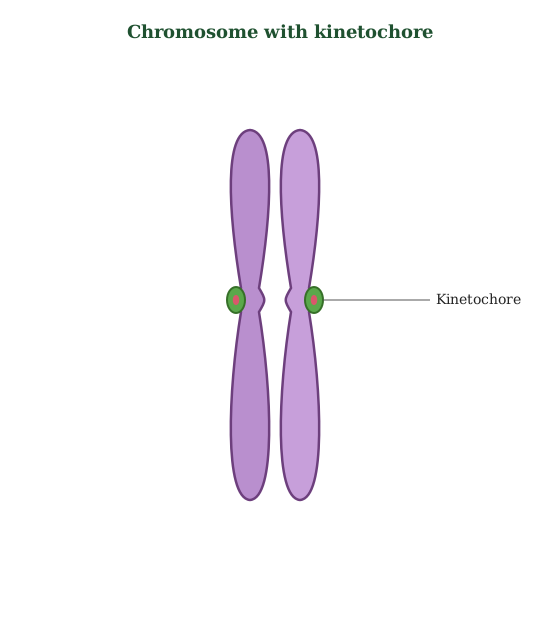
A chromosome is coiled DNA-protein, held together at the centromere, capped by telomeres, and packed via nucleosomes.
- A chromosome is a thread-like, condensed structure made of DNA wound around histone proteins, most clearly visible and best described during cell division (especially at metaphase).
- Components:
- Chromatid -- after S-phase (DNA replication), each chromosome consists of two identical sister chromatids, joined together at the centromere.
- Centromere (primary constriction) -- the specialised, constricted region joining sister chromatids; it bears the kinetochore, the site of spindle-fibre attachment during cell division. Its position along the chromosome determines shape/type (metacentric, submetacentric, acrocentric, telocentric).
- Secondary constriction -- a second, less deeply constricted region, often associated with the nucleolar organiser region (NOR), the site where the nucleolus forms; chromosomes bearing this feature are called SAT-chromosomes (satellite chromosomes).
- Telomeres -- specialised nucleoprotein caps at each chromosome end, made of repetitive DNA sequences, which prevent degradation and end-to-end fusion of chromosomes, maintaining chromosomal stability.
- Chromonema -- the fine, coiled DNA-protein (chromatin) thread that constitutes the chromosome body, becoming maximally condensed and visible at metaphase. …
Unlock everything free for 14 days
- Full step-by-step solutions
- Concept-first explanations
- Methods, shortcuts & mistakes
- PYQ mapping + timed mock tests
Full access for 14 days. No credit card required.