Solved Examples · Example 4
Q.CE amplifier circuit using Silicon transistor is shown in figure. Calculate i) ii) iii) . Given = 1.32mA and =100
Karnataka PUCTextbookNumericImportance★★★★★est
20% · 18/91 Questions
You're viewing a preview — the full solution, concept, methods & PYQ mapping are locked.
Start your 14-day free trial to unlock the full solution →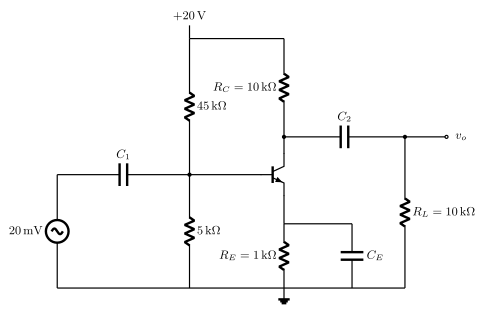
[!TLDR]
Use the model of the CE amplifier: , , and .
A common emitter amplifier gives both voltage and current amplification. In its AC () model the transistor's emitter diode is replaced by the AC resistance and the collector behaves as a current source, so the small-signal parameters become simple ratios of resistances.
Given: silicon transistor, , , , .
Step 1 — AC resistance of the emitter diode (silicon):
Step 2 — output impedance (collector load seen by the signal): …
Unlock everything free for 14 days
- Full step-by-step solutions
- Concept-first explanations
- Methods, shortcuts & mistakes
- PYQ mapping + timed mock tests
Full access for 14 days. No credit card required.