Q.With the help of a neat, labelled diagram describe the structure of root hair.
You're viewing a preview — the full solution, concept, methods & PYQ mapping are locked.
Start your 14-day free trial to unlock the full solution →A root hair is a fine, unicellular, tubular outgrowth of a root epidermal (piliferous layer) cell; it has a thin cellulose wall, a large central vacuole, a thin peripheral layer of cytoplasm with the nucleus usually n...
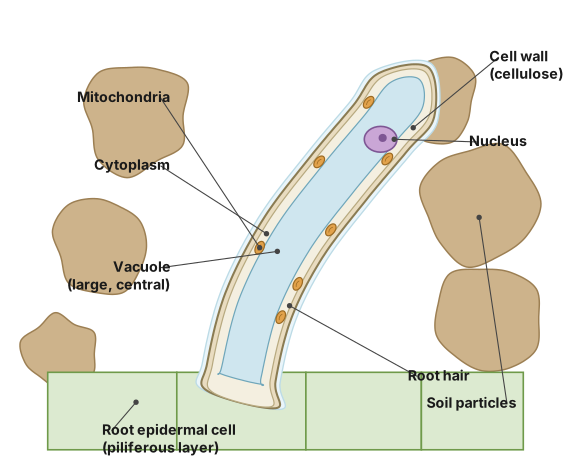
Root hairs are thin, tubular extensions of epidermal cells that vastly increase the root's absorptive surface area.
Root hairs arise as tubular, thread-like outgrowths from individual cells of the root epidermis (the piliferous layer), located just behind the growing root tip in the region of maturation. Each root hair is a single elongated cell, not multicellular, with a delicate primary cellulose wall, a thin peripheral layer of cytoplasm lining the cell, and a large central vacuole occupying most of the cell's volume, which helps maintain turgor and drives osmotic water uptake; the nucleus is typically located near the growing tip of the root hair. Root hairs grow out into the tiny spaces between soil particles, coming into intimate, close contact with the thin films of capillary water adhering to soil particles, which vastly increases the total absorptive surface area of the root system, making root hairs the …
Unlock everything free for 14 days
- Full step-by-step solutions
- Concept-first explanations
- Methods, shortcuts & mistakes
- PYQ mapping + timed mock tests
Full access for 14 days. No credit card required.