Q.(a) Give reason - Water acts as thermal buffer.
You're viewing a preview — the full solution, concept, methods & PYQ mapping are locked.
Start your 14-day free trial to unlock the full solution →Water has a very high specific heat capacity, so it absorbs or releases large amounts of heat with only a small change in its own temperature, allowing it to buffer/stabilise the temperature of organisms and their env...
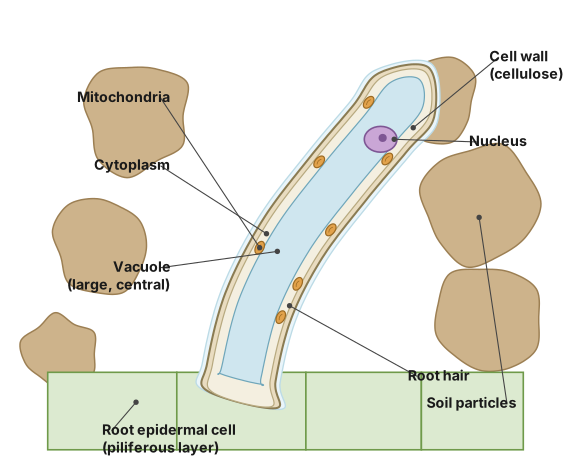
Water's high specific heat lets it absorb/release large heat quantities with little temperature change, buffering biological systems; a root hair cell contains a nucleus, mitochondria and a prominent vacuole for water uptake.
(a) Water has an unusually high specific heat capacity compared to most other common liquids, meaning a relatively large amount of heat energy must be absorbed to raise its temperature (or released to lower it) by a given amount. Because living tissues and cells are largely composed of water, this property allows organisms - and bodies of water in the environment - to resist rapid or drastic changes in temperature even when they gain or lose considerable heat, effectively acting as a thermal buffer that keeps internal (and local environmental) temperatures relatively stable. …
Unlock everything free for 14 days
- Full step-by-step solutions
- Concept-first explanations
- Methods, shortcuts & mistakes
- PYQ mapping + timed mock tests
Full access for 14 days. No credit card required.