Solved Examples · Example 6
Q.Find the output of the following circuit :
Karnataka PUCTextbookNumericImportance★★★★★est
31% · 31/100 Questions
You're viewing a preview — the full solution, concept, methods & PYQ mapping are locked.
Start your 14-day free trial to unlock the full solution →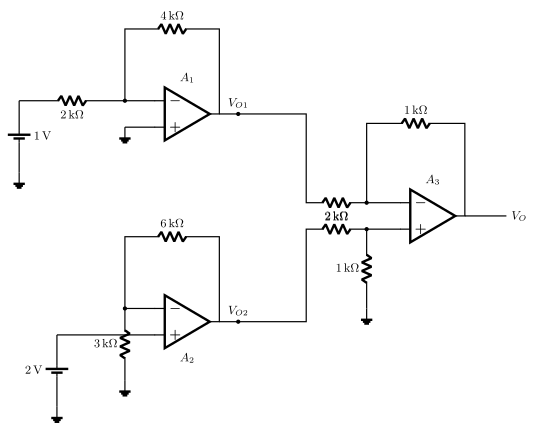
[!TLDR]
With from the inverting stage and from the non-inverting stage, the subtractor output is .
The signal passes through three op-amp stages, each analysed with its own standard relation.
Stage (inverting amplifier):
Stage (non-inverting amplifier):
Stage (subtractor), which combines the two stage outputs: …
Unlock everything free for 14 days
- Full step-by-step solutions
- Concept-first explanations
- Methods, shortcuts & mistakes
- PYQ mapping + timed mock tests
Full access for 14 days. No credit card required.