Q.Describe histological structure of Testis with well labelled diagram.
You're viewing a preview — the full solution, concept, methods & PYQ mapping are locked.
Start your 14-day free trial to unlock the full solution →The testis is covered by a fibrous tunica albuginea and is internally divided by septa into lobules, each containing coiled seminiferous tubules (lined by germinal epithelium with spermatogonia, spermatocytes, spermat...
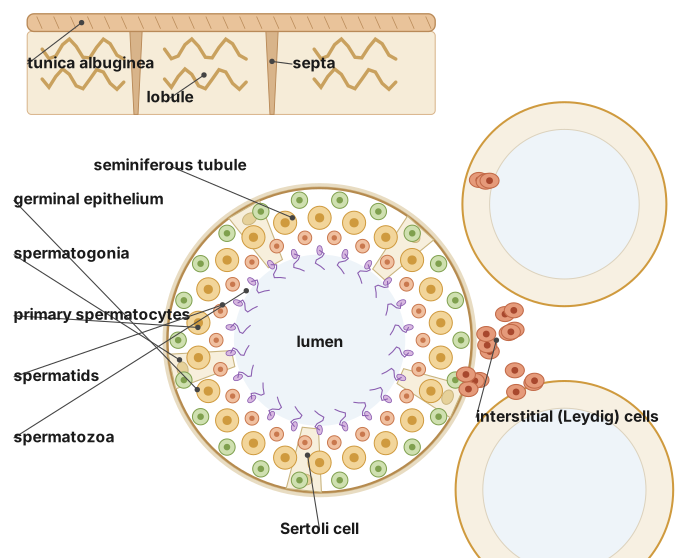
The testis has seminiferous tubules (producing sperm, lined by Sertoli cells) set in lobules, with interstitial Leydig cells between them secreting testosterone.
Histologically, each testis is enclosed by a tough, fibrous capsule called the tunica albuginea, from which septa extend inward dividing the testis into about 200-300 testicular lobules. Each lobule contains one to three highly coiled seminiferous tubules, which are the actual sites of sperm production (spermatogenesis). The wall of a seminiferous tubule is lined by a germinal (germinal epithelium) layer showing a graded series of cells from the periphery towards the lumen — spermatogonia (diploid stem cells) nearest the basement membrane, which give rise by mitosis and then meiosis to primary spermatocytes, secondary spermatocytes, spermatids, and finally mature spermatozoa released into the lumen. Interspersed among the germinal cells are large, non-dividing Sertoli (nurse) cells, which support, nourish and protect the developing germ cells, and secrete substances (like androgen-binding protein and inhibin) that regulate spermatogenesis. In the loose connective tissue occupying the interstitial spaces between the seminiferous tubules lie clusters of Leydig cells (interstitial cells), which are endocrine in function and secrete the male sex hormone testosterone, essential for spermatogenesis an …
Unlock everything free for 14 days
- Full step-by-step solutions
- Concept-first explanations
- Methods, shortcuts & mistakes
- PYQ mapping + timed mock tests
Full access for 14 days. No credit card required.