Q.With the help of labelled diagram describe the structure of human sperm.
You're viewing a preview — the full solution, concept, methods & PYQ mapping are locked.
Start your 14-day free trial to unlock the full solution →The human sperm has three main regions: a head (containing the haploid nucleus and an acrosome cap with hydrolytic enzymes for penetrating the egg), a middle piece (containing a mitochondrial spiral sheath that genera...
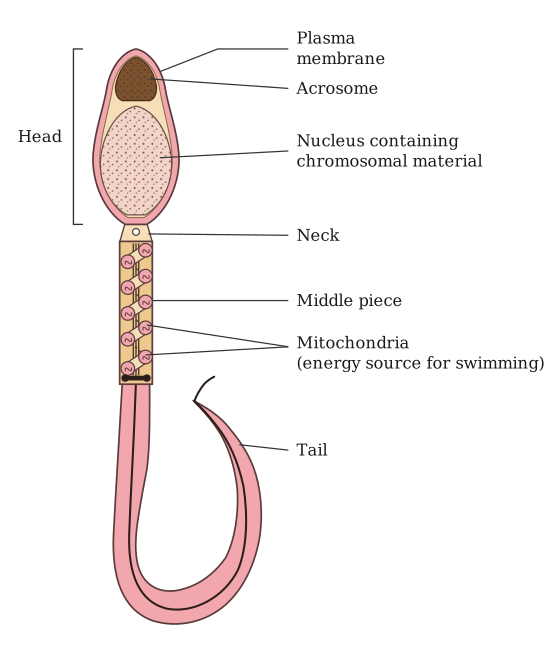
Sperm structure: head (nucleus + acrosome), middle piece (mitochondria for energy), and tail/flagellum (for motility).
The mature human spermatozoon is a highly specialized, motile cell structurally divided into distinct regions, each adapted for a specific function:
Head: The head is oval/elongated in shape and contains the haploid, highly condensed nucleus, which carries the paternal genetic material. Covering the anterior two-thirds of the nucleus is the acrosome, a cap-like structure derived from the Golgi apparatus, packed with hydrolytic enzymes (such as hyaluronidase and proteases); during fertilization, the acrosome undergoes the 'acrosome reaction', releasing these enzymes to digest the outer covering of the ovum and allow sperm penetration.
Middle piece: Located just behind the head, the middle piece contains a central axial filament (axoneme, the core of the flagellum, continuing from the head into the tail) surrounded by a tightly wound helical sheath of numerous mitochondria; these mitochondria generate the ATP energy required to power the vigorous, whip-like movements of the tail that drive sperm motility. …
Unlock everything free for 14 days
- Full step-by-step solutions
- Concept-first explanations
- Methods, shortcuts & mistakes
- PYQ mapping + timed mock tests
Full access for 14 days. No credit card required.