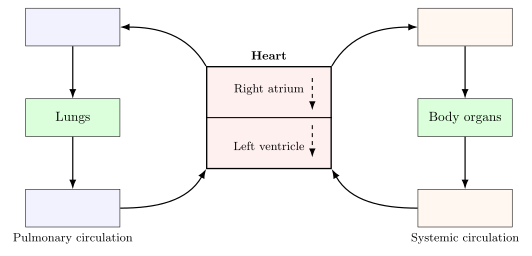
Q.Complete the following flow diagram of double circulation (see figure):
You're viewing a preview — the full solution, concept, methods & PYQ mapping are locked.
Start your 14-day free trial to unlock the full solution →Pulmonary circulation (right side): deoxygenated blood in the right atrium → right ventricle → pulmonary artery → lungs (oxygenated) → back to the heart (left atrium) via pulmonary veins.
Double circulation routes blood through two separate loops: pulmonary (heart-lungs-heart) for oxygenation and systemic (heart-body-heart) for tissue supply.
Humans (and other mammals/birds) have a double circulatory system, meaning blood passes through the heart twice in one complete circuit, via two connected loops. In pulmonary circulation, deoxygenated blood collected in the right atrium (from the venae cavae) passes into the right ventricle, which pumps it through the pulmonary artery to the lungs; there the blood releases CO2 and picks up O2, becoming oxygenated, and returns to the heart's left atrium via the pulmonary veins. In systemic circulation, this oxygenated blood passes from the left atrium into the left ventricle, which pumps it forcefully through the aorta to all the body organs and tissues; there the blood delivers O2 and nutrients and picks up CO2 and wastes, becoming deoxygenated, before returning to the right atrium via the superior and inferior venae cavae, completing the double circuit. On the flow diagram: the empty …
Unlock everything free for 14 days
- Full step-by-step solutions
- Concept-first explanations
- Methods, shortcuts & mistakes
- PYQ mapping + timed mock tests
Full access for 14 days. No credit card required.