Q.With the help of a neat and labelled diagram, explain the conducting system of human heart.
You're viewing a preview — the full solution, concept, methods & PYQ mapping are locked.
Start your 14-day free trial to unlock the full solution →The heart's conducting system comprises the SA node (pacemaker, in the right atrial wall) → spreads over both atria (atrial contraction) → AV node (atrial septum) → Bundle of His → left and right bundle branches → Pur...
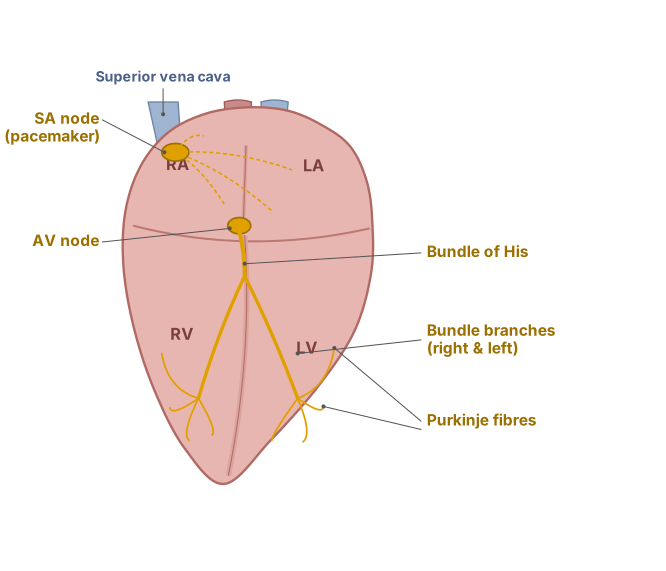
SA node → atria → AV node → Bundle of His → bundle branches → Purkinje fibres: the heart's own electrical conduction pathway.
The mammalian heartbeat is myogenic, initiated and coordinated by a specialised conducting system of modified cardiac muscle. The sinoatrial (SA) node, embedded in the wall of the right atrium near the opening of the superior vena cava, generates rhythmic electrical impulses spontaneously and is therefore called the natural pacemaker of the heart. This impulse spreads rapidly through the muscle of both atria, causing them to contract simultaneously (atrial systole) and reaches the atrioventricular (AV) node located in the atrial septum near the AV boundary. After a brief conduction delay at the AV node (allowing the atria to finish emptying blood into the ventricles), the impulse passes into the atrioventricular bundle (Bundle of His), which travels through the interventricular se …
Unlock everything free for 14 days
- Full step-by-step solutions
- Concept-first explanations
- Methods, shortcuts & mistakes
- PYQ mapping + timed mock tests
Full access for 14 days. No credit card required.